
The Analytics Engine for Your Data Lake
Run faster, spend less, scale further, without changing a line of code.
Run a Free Assessment
6
Minute
Setup
Setup
3×
Performance
Gains
Gains
60%
Cost
Reduction
Reduction
Fits in your stack
Drops in and Your
Stack Stays Put
Flarion replaces the execution engine powering your analytics jobs. It builds a better plan and runs it natively, so the same jobs finish faster, use less memory, and cost less.
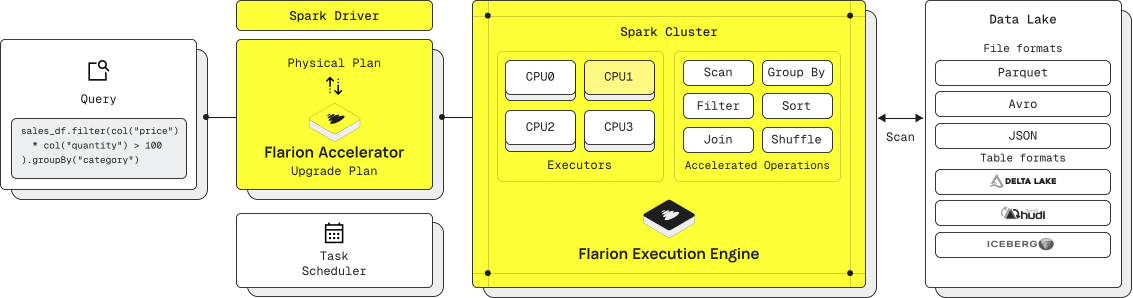
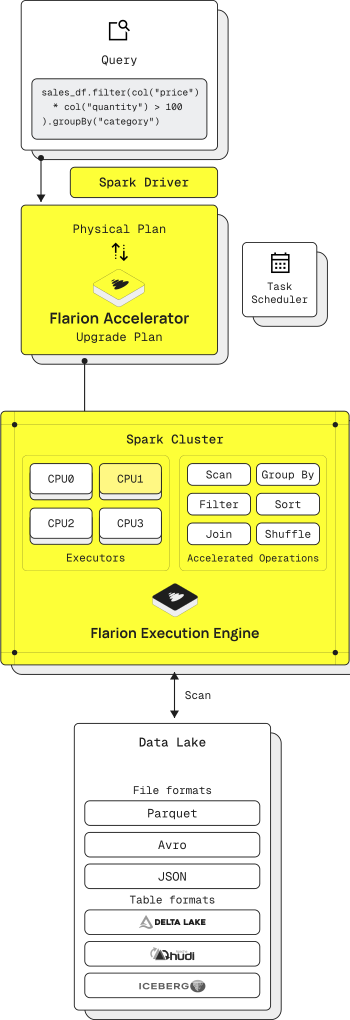
How it works
How Flarion
Does Less Work
A leaner plan, columnar data, native execution, and caching. The same job, with less work.
Native
More work per cycle, no garbage collector.
Native · Lower CPU, flat memory
Flarion's engine is native code running close to the hardware. It uses resources sparingly and releases them as soon as the work is done. Lower CPU, flat memory, no GC pauses. The same job done sooner.
Spark UI · Details for Stage 4 (Attempt 0)
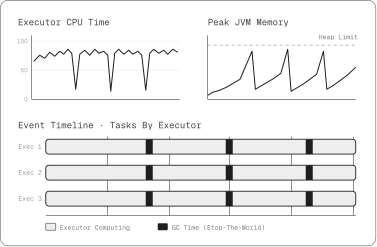
Details for Stage 4 · With Flarion
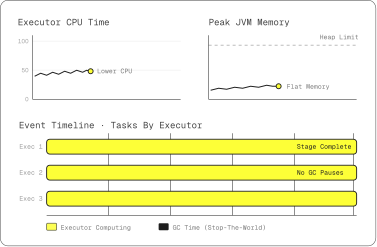
Plan
Fewer steps, so the job finishes sooner.
Fewer steps · One less shuffle
Before the job runs, Flarion upgrades the plan, merging steps and cutting a shuffle between stages. Same job, less to execute.
Columnar
Filtering and sorting run faster on columns.
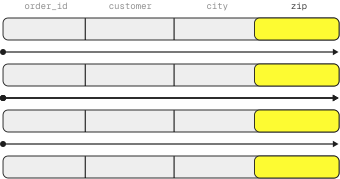
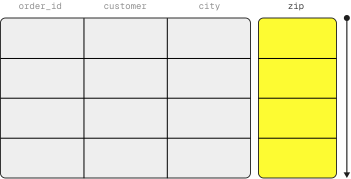
Columnar data · Filter and sort without walking rows
Row layout packs every field together on disk, so queries read and discard data they don’t need. Column layout keeps each column contiguous, so queries read only the requested values. That’s why modern analytical engines are columnar.
The Job: Get every zip code
Row layout · Reads 16 fields to keep 4
Column layout · Reads only the zip column
Caching
Work you've run before doesn't run again.
Caching · Only new work executes
Flarion caches data and results it has already computed. A later run that needs the same data is served from cache instead of recomputing it. Only genuinely new work executes.
Served from cache
New work
Native · Lower CPU, flat memory
Flarion's engine is native code running close to the hardware. It uses resources sparingly and releases them as soon as the work is done. Lower CPU, flat memory, no GC pauses. The same job done sooner.
Spark UI · Details for Stage 4 (Attempt 0)
Details for Stage 4 · With Flarion
Fewer steps · One less shuffle
Before the job runs, Flarion upgrades the plan, merging steps and cutting a shuffle between stages. Same job, less to execute.
Columnar data · Filter and sort without walking rows
Row layout packs every field together on disk, so queries read and discard data they don’t need. Column layout keeps each column contiguous, so queries read only the requested values. That’s why modern analytical engines are columnar.
The Job: Get every zip code
Row layout · Reads 16 fields to keep 4
Column layout · Reads only the zip column
Caching · Only new work executes
Flarion caches data and results it has already computed. A later run that needs the same data is served from cache instead of recomputing it. Only genuinely new work executes.
Served from cache
New work
Reliability
Jobs Fail Less
Flarion manages memory natively and recovers from common failures on its own.
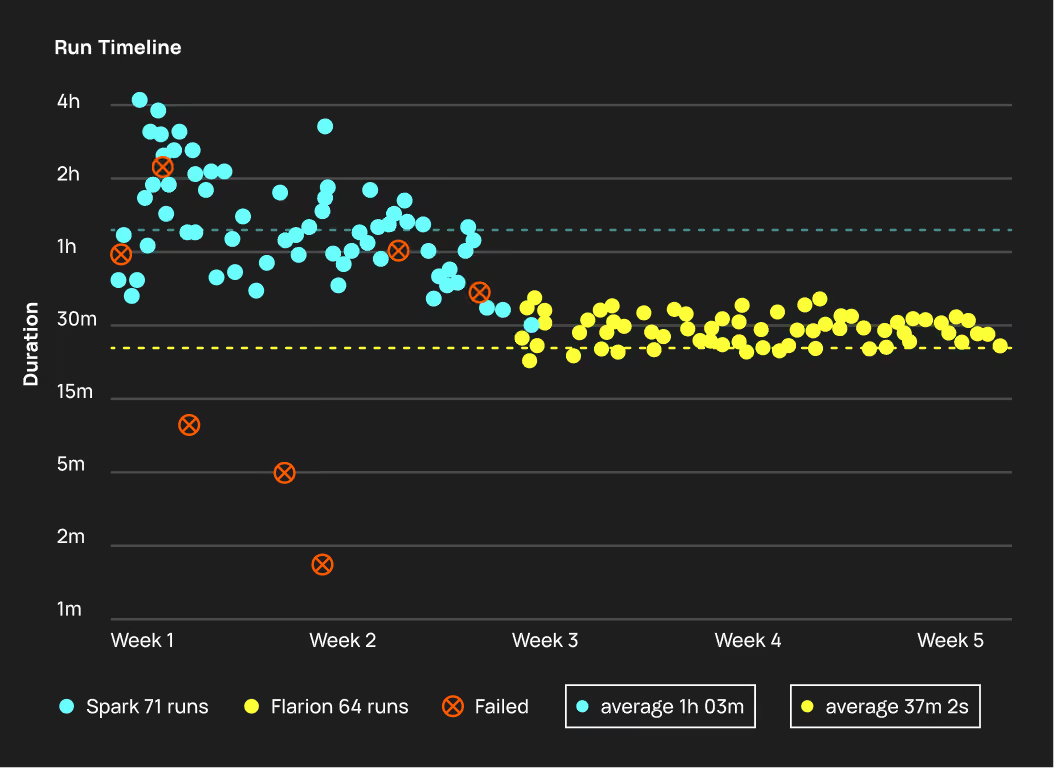

Robust Memory Handling

Automatic Recovery

Evidence-Backed Fixes
Platforms
One Engine,
Every Platform
One JAR, on your existing platforms. No new infrastructure.

Set up in 6 minutes · One config change · No new permissions
Security
Your Data Stays Within Your Infrastructure
Nothing leaves your environment except optional telemetry.

Data Privacy
No agent or service installed.

Enterprise Security
Secure by design

Deployment Control
No access to your environment.
Blog
The Latest from Flarion


Run a free assessment
See Projected Results on Your Own Jobs, Before Anything is Installed
Once deployed, every run reports the results